GIRS accredited gas connection specialists

New Gas Mains & Service Connections for Housing Developments

From preliminary enquiry to GDN adoption. We manage the full gas main installation for residential schemes of 2 to 200+ plots under one PM and one contract.

GIRS accredited One contract 24h quotes
The Process
1
Feasibility & network check
2
GDN application & design approval
3
Mains & service installation
4
Testing, adoption & MPRN issue
From Application to Live Supply

The Process Step by Step

Every gas connection follows a clear, auditable sequence. Here is exactly what happens at each stage.

1

Preliminary Enquiry and Feasibility

Before any formal application is made, USP carries out a preliminary feasibility check against the GDN network records. This establishes the location of the nearest relevant gas main, whether it has sufficient capacity to support the proposed development load, and whether any mains reinforcement will be required. In the West Midlands, the relevant GDN is Cadent Gas. For developments near the Cadent boundary, we also check the coverage of Wales & West Utilities. This early check determines whether a standard connection is achievable or whether a bespoke quotation will be required.

2

Formal Application and Design Approval

Once feasibility is confirmed, USP submits the formal connection application to the GDN on your behalf. For housing developments, this includes the site layout, number of dwellings, anticipated gas load per property, and proposed meter positions. The GDN issues a connection offer setting out the Point of Connection, non-contestable charges, and design requirements. USP then prepares the contestable design: detailed engineering drawings for the new PE gas main, individual service connections to each plot, and pressure test requirements. These drawings are submitted for GDN approval before groundworks begin.

3

Installation of Mains and Services

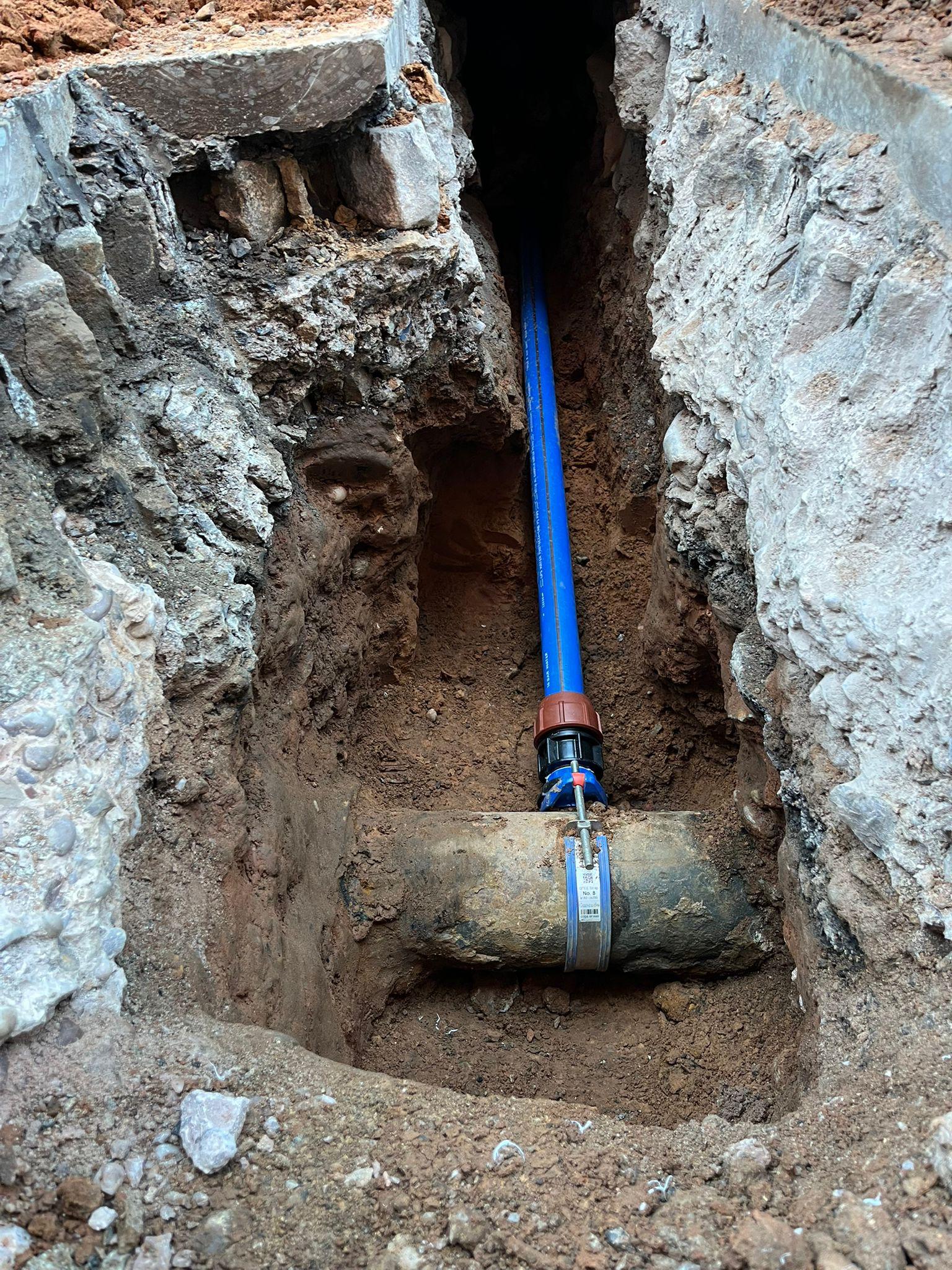
With design approval in place, USP mobilises its GIRS-accredited installation team. The gas main (typically 63mm or 90mm PE80 SDR11 pipe for residential schemes) is installed in a shared utilities trench alongside water and, where possible, electricity ducting. Individual 32mm PE service pipes are run from the new main to each plot meter position, electrofusion jointed and pressure tested in accordance with IGE/TD/3. Meter boxes are installed to the correct specification and orientation at each plot boundary. Non-compliant meter boxes will result in an abortive visit and a programme delay.

4

Pressure Testing, Commissioning and Adoption

Once installation is complete, USP carries out formal pressure testing of both the main and individual services. Test results are recorded on GDN-standard documentation and submitted alongside as-built drawings, welder qualification records, and all quality documentation. The GDN inspection team then verify the site before the infrastructure is formally adopted. Adoption triggers the issue of MPRN numbers for each plot, required before a gas supplier can arrange meter installation. USP coordinates the MPRN issue process to ensure numbers are available when each plot is ready.

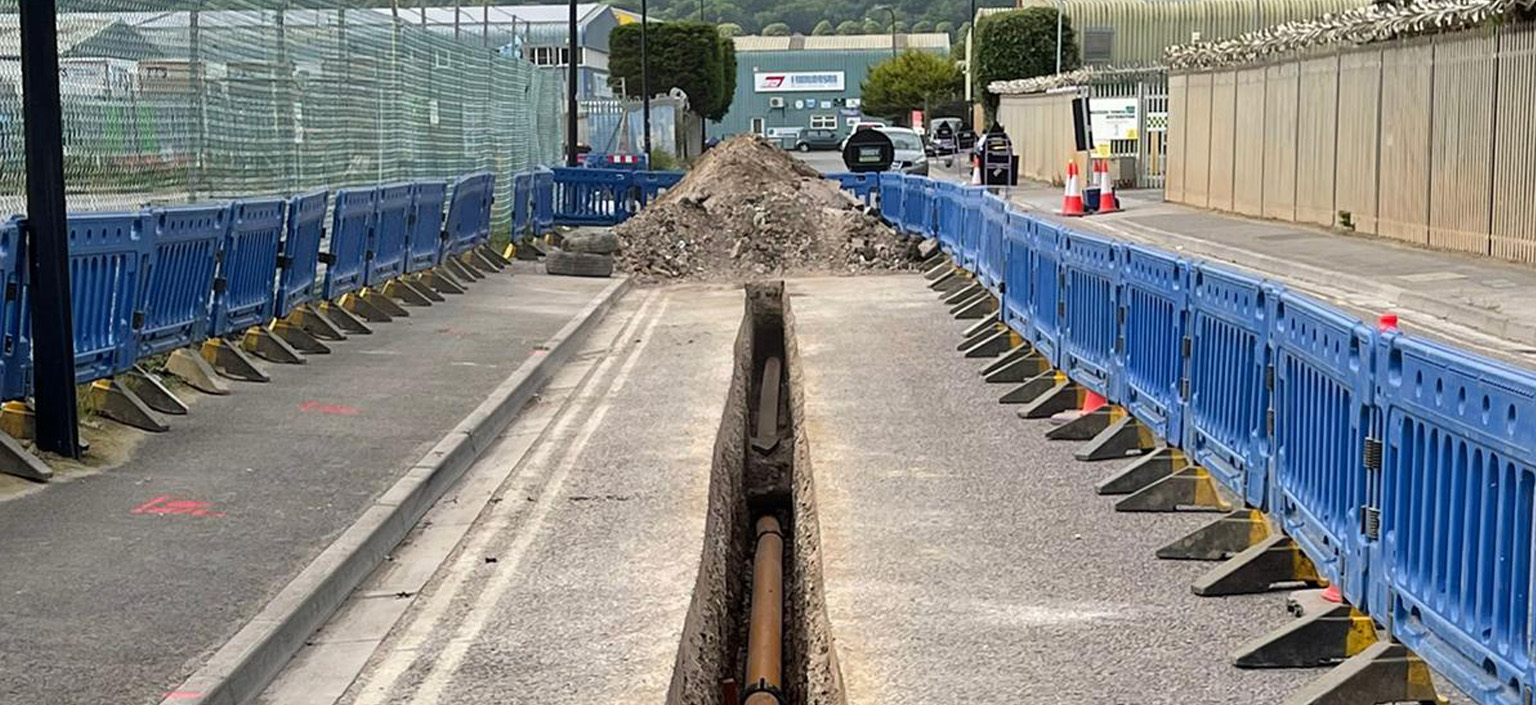
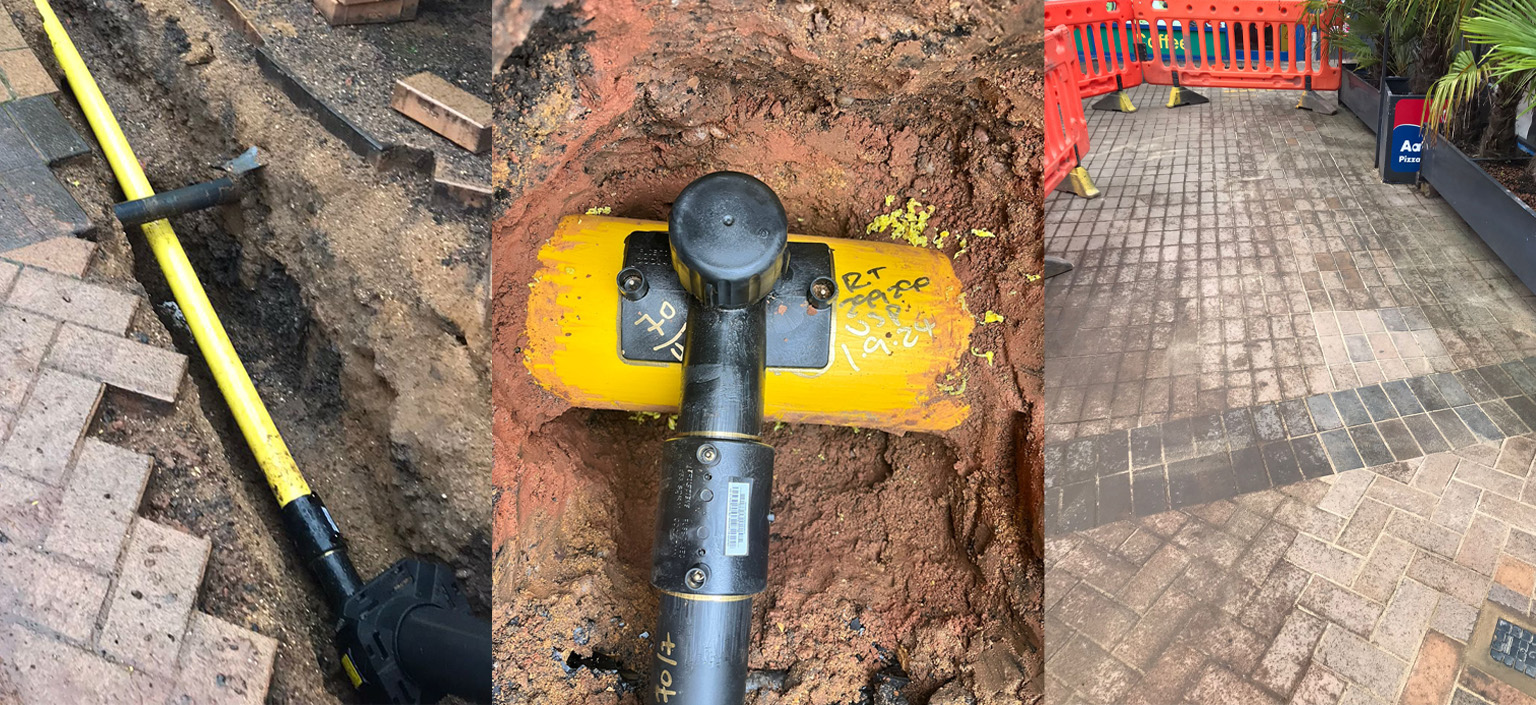
USP team installing gas mains in an open trench with safety barriers on a live development site
Proof on the Ground

See it in action

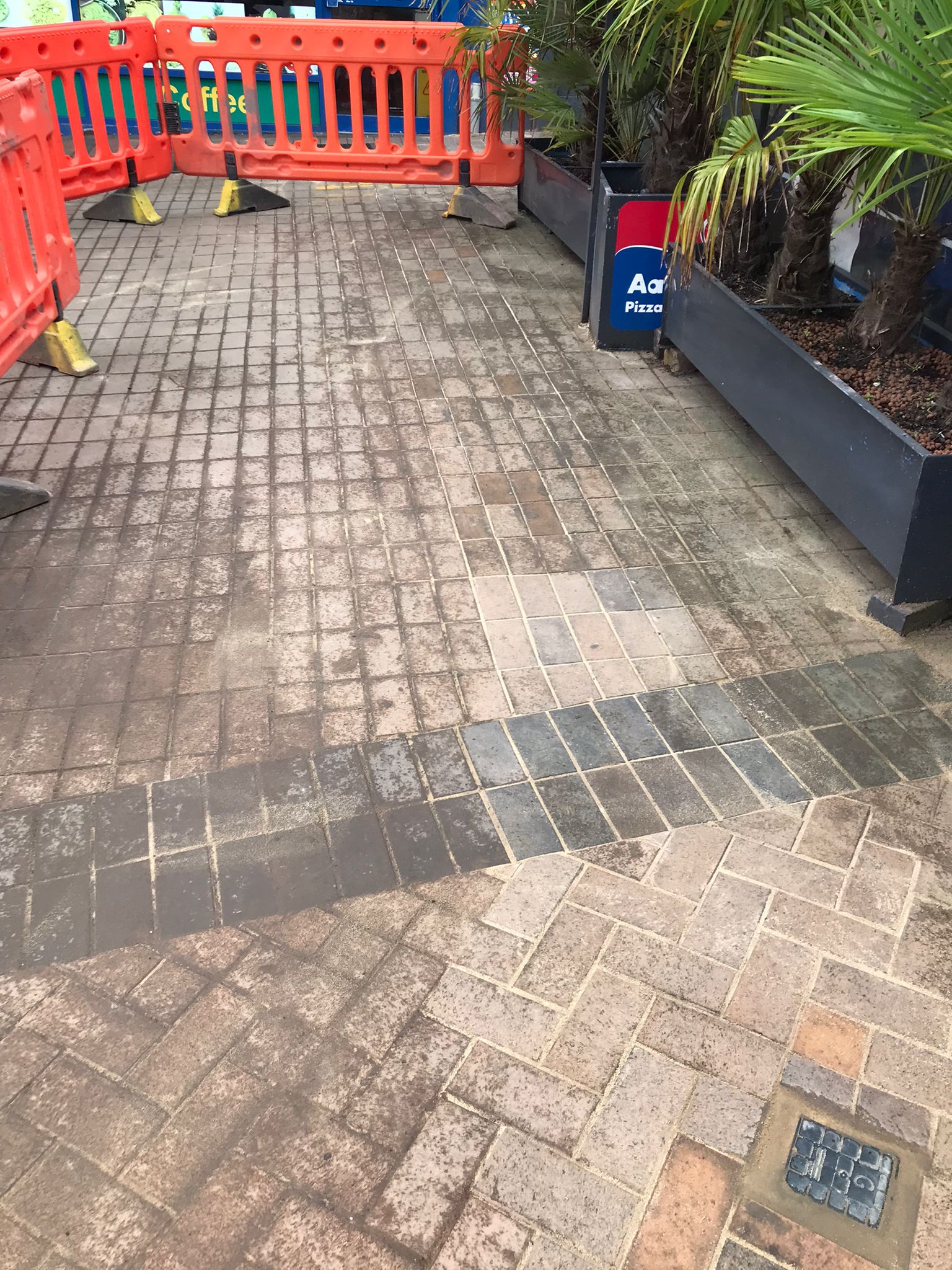
Every gas main we install is pressure tested, GDN inspected, and formally adopted before handover. These are real USP projects, not stock photos.

500+
Gas connections delivered
50
5-star Google reviews
10+
Industry accreditations
Key Technical Considerations

Technical Specifications

The critical parameters that govern every residential gas main installation.

Pipe material
PE80 or PE100 SDR11. Standard for LP/MP residential networks. All fittings must be IGEM-approved.
Main sizing
Determined by GDN network analysis based on total connected load and diversity factor. Typically 63mm to 125mm for most residential schemes.
Service size
Standard domestic service: 32mm PE. Larger services may be required for properties with high gas demand.
Pressure
Low pressure (LP) for most residential networks: below 75 mbar. Medium pressure (MP) connections require additional design and inspection.
Tracer wire
Mandatory on all PE gas mains for future location. Must be continuous and tested on adoption.
Marker tape
Yellow gas warning tape placed above the pipe at the correct depth.
Phased delivery
For multi-phase schemes, USP designs the main to accommodate the full development load from the outset, with phased service connections as plots are built.
From Our Sites

Real Gas Connection Work

Why Choose USP

What USP Can Do For You

End-to-end capability from a single GIRS-accredited provider.

Full GIRS accreditation. USP is a registered Utility Infrastructure Provider for gas, authorised by Cadent Gas and approved by Lloyd's Register.
We manage the complete process from preliminary enquiry through to GDN adoption, acting as a single point of contact for all gas connection matters on your development.
Our in-house GIRS-qualified design team produces GDN-compliant PE main and service drawings, reducing the risk of design rejection and programme delay.
By combining your gas main installation with water and electricity in a coordinated multi-utility trench, USP minimises civils costs and disruption to your build programme.
USP has delivered gas connections for residential schemes ranging from 2 to 200+ plots, working with housebuilders, housing associations and self-build developers across the Midlands and beyond.
Certified Provider

Fully Accredited & Committed to Safety

Every gas connection we deliver meets the highest industry standards. Worker safety, public safety, environmental responsibility, and project compliance from planning to sign-off.

WaterSafe accredited
WIAPS accredited
LRQA WIRS certified
LRQA NERS certified
LRQA GIRS certified
ISO 9001 certified
Achilles UVDB Silver Plus
Constructionline member
SSIP accredited
Acclaim accredited
What Our Clients Say About Us

Rated 5.0 ★★★★★

50 Google Reviews

Gas Mains for Housing FAQs

Frequently Asked Questions

Residential gas mains are typically installed using PE80 or PE100 SDR11 polyethylene pipe. All fittings must be IGEM-approved. The pipe is electrofusion jointed and pressure tested to GDN technical specifications before adoption.
After installation and pressure testing, the GDN carries out a site verification visit. Once satisfied, the infrastructure is formally adopted into the GDN asset register. The typical timeline from installation completion to adoption and MPRN issue is 4 to 8 weeks, depending on the GDN inspection schedule.
Main sizing is determined by the GDN network analysis based on total connected load and a diversity factor. For most residential schemes this is 63mm to 125mm PE pipe. USP prepares the load assessment and submits it as part of the formal application.
Yes. For multi-phase schemes, USP designs the main to accommodate the full development load from the outset, with phased service connections as plots are built. This avoids costly redesign work between phases.
USP carries out a preliminary feasibility check against the GDN network records before any formal application. If reinforcement or a mains extension is required, we identify this early and include it in the programme so there are no surprises mid-build.
Yes. By combining your gas main installation with water and electricity in a coordinated multi-utility trench, USP minimises civils costs and disruption to your build programme. One trench, one programme, one contract.
Get Started

Ready to Connect Your
Housing Development to Gas?

Tell us about your project and we will send you a free, no-obligation gas connection plan within 24 hours.

100% free, no obligation Response within 24 hours 5.0 from 50 Google reviews

Prefer to talk? Call 024 7542 6505 for immediate service.

Get a Quote